
Digital Education
Digital Education
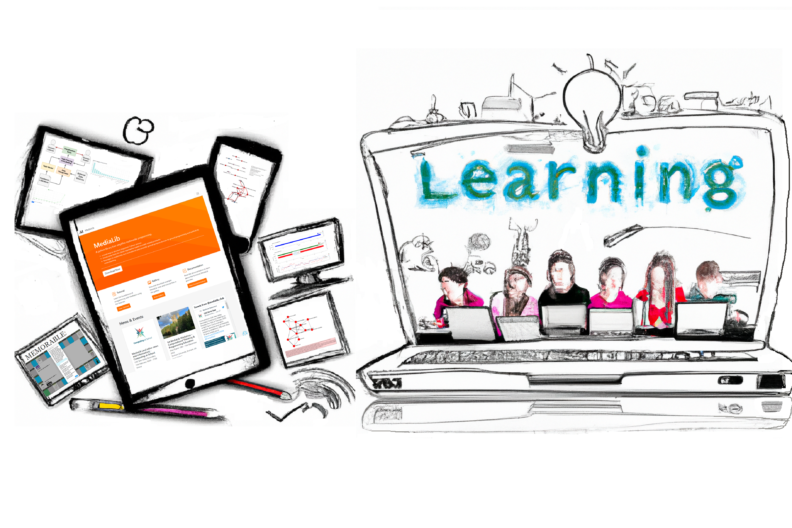
Members of this theme devote themselves to incorporate emerging techniques in computer science and data science with theories in pedagogy and educational psychology. We aim to understand characteristics of learners, educators and features of knowledge in various domains, develop and evaluate applications/tools to better support learning and teaching, and explore new educational theories.
Research Highlights
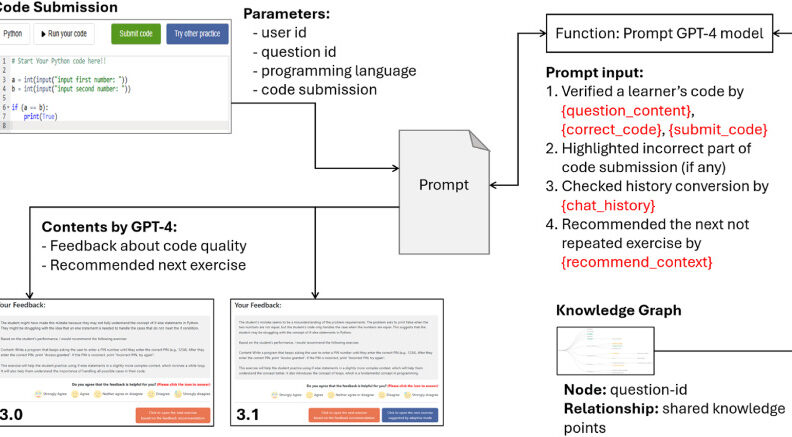
Evaluating adaptive and generative AI-based feedback and recommendations in a knowledge-graph-integrated programming learning system
Jingyun Wang
Ever wondered how to make AI-powered learning systems more adaptive and reliable? Our new study tackles this by fusing Knowledge Graphs with real-time user interaction history within a Retrieval-Augmented Generation (RAG) framework — creating a smarter, more context-aware foundation for educational LLMs.
To our knowledge, this is one of the first implementations of such an integrated architecture specifically designed for intelligent tutoring systems. Beyond the technical design, we conducted a comprehensive real-world evaluation across different recommendation strategies and AI feedback mechanisms, yielding actionable insights into what truly enhances programming learning performance.
Our findings not only validate the effectiveness of this hybrid approach but also provide clear guidance for building more personalized, responsive, and pedagogically sound AI-driven education tools.
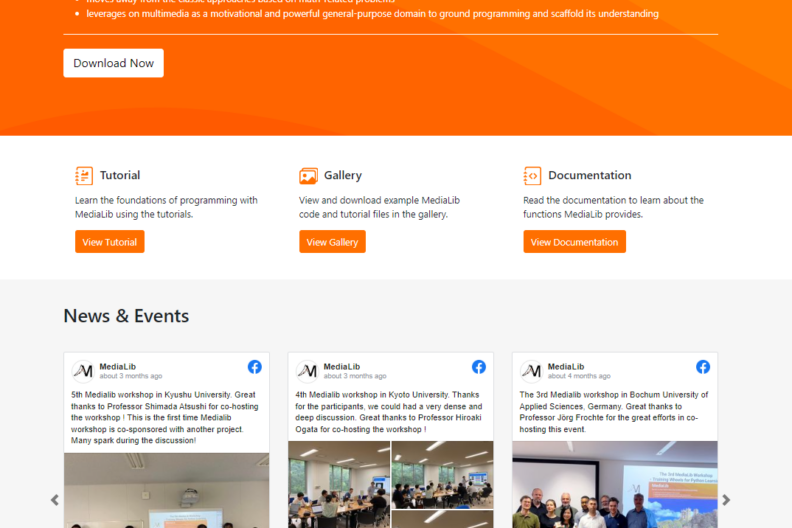
Medialib – The first cut-down Python library that simplifies multimedia programming
Jingyun Wang
Programming skills are one of the paramount STEM skills for the current generations. However, supporting higher education teachers to implement programming in their class with non-technical beginners, is one of the most challenging issues. Most of the novice university students struggled with traditional Python exercises that require maths content as a prerequisite because the abstract logic behind maths solutions challenges the summarization of decomposition and its application to other problems. Adding programming logic on top of complicated maths logic exacerbates the challenges for non-technical learners who already struggle with maths. To address this issue, we proposed a new beginner-friendly multimedia Python library named Medialib designed to simplify multimedia programming. The library and its teaching materials is intended to enable programming education to move the focus from maths-related problems to multimedia programming. We aim to create interactive and engaging experiences by incorporating elements from other fields including game implementation to help learners develop a more versatile skill set.
Following the official launch of the MediaLib website on October 31st, 2022, until September 2023, over 5116 unique users from 66 countries have visited the website. The majority of users come from diverse regions including the UK, Japan, China, USA, and Germany, showcasing its broad international appeal. Pages were viewed a total of 15,161 times. We have organized 8 internationally workshops in 5 countries (UK, Denmark, Germany, Japan and China) involving 149 participants.
The engage taxonomy: SDT-based measurable engagement indicators for MOOCs and their evaluation
Alexandra I. Cristea
This paper shows for the first time how Self-Determination Theory (SDT) can be mapped onto concrete features extracted from tracking student behaviour on MOOCs. The paper further contributes by building the Engage Taxonomy, the first taxonomy of MOOC engagement tracking parameters, mapped over 4 engagement theories: SDT, Drive, ET, Process of Engagement. Importantly, the paper also serves as the first large-scale evaluation of the SDT theory itself, providing a blueprint for large-scale theory evaluation. It also provides for the first-time metrics for measurable engagement in MOOCs, including specific measures for Autonomy, Relatedness and Competence.